Step into any British garden on a warm summer’s day and you’ll witness one of nature’s most extraordinary partnerships in action. As bees hum from flower to flower and butterflies dance on the breeze, an ancient choreography unfolds—one that has been perfected over millions of years of evolution.
These aren’t random encounters. Each pollinator has its preferred partners, and every flower has evolved intricate strategies to attract exactly the right visitor. Understanding these relationships can transform how we think about our gardens and the wild spaces around us.
The Specialists: Perfect Partnerships Millions of Years in the Making
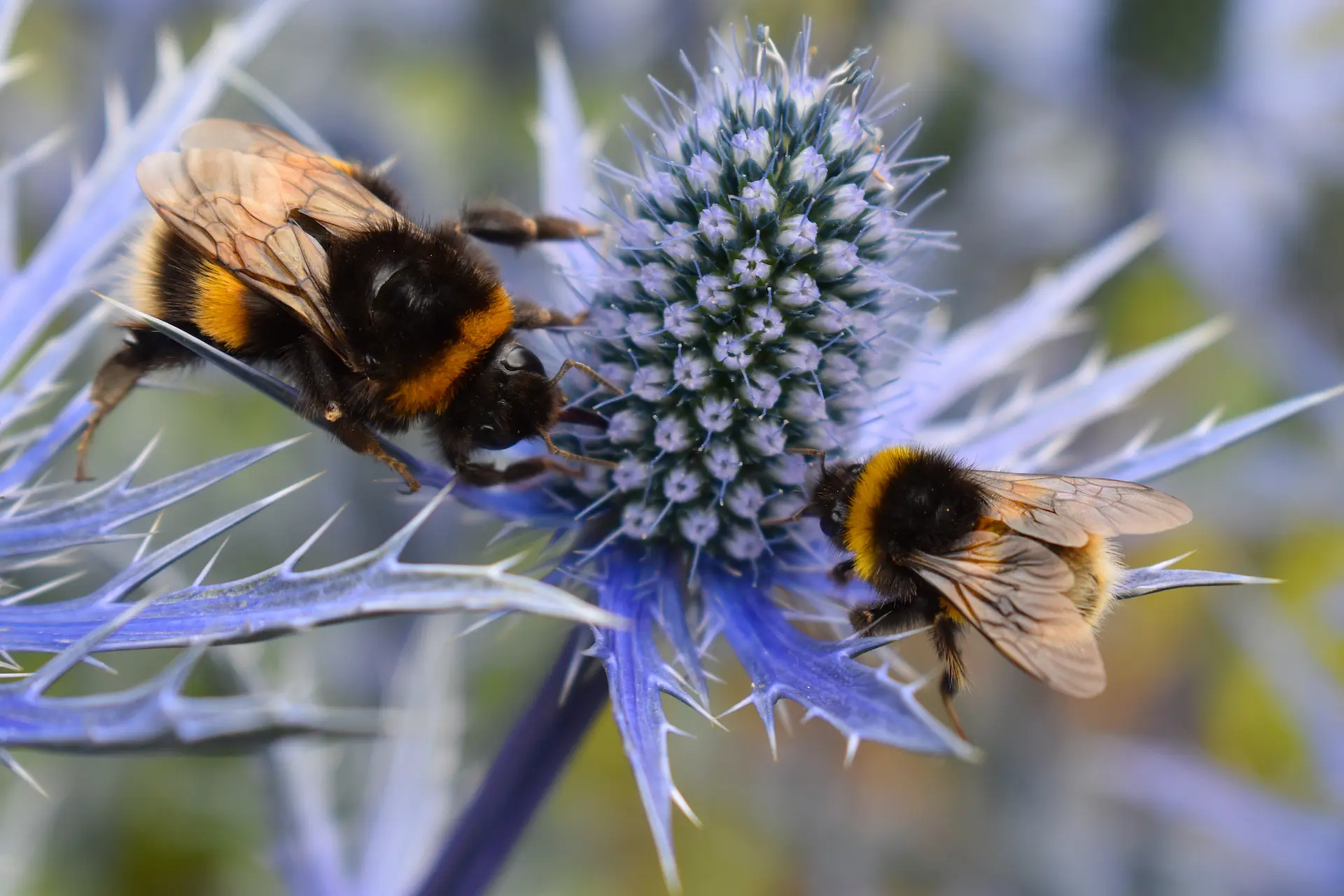
Some of Britain’s most beloved flowers have evolved alongside their pollinators so closely that they’ve become almost inseparable. Take the common foxglove, with its distinctive tubular purple blooms that seem almost too deep for any sensible insect to navigate. Yet the long-tongued bumblebee, particularly Bombus hortorum, has evolved the perfect proboscis to reach the nectar hidden deep within. As the bee pushes into the flower, pollen from the anthers dusts its fuzzy back, ready to be transferred to the next foxglove it visits.

This partnership is so specific that foxgloves struggle to reproduce without their bumblebee allies. The flower’s spotted throat acts like a landing strip, guiding the bee to the nectar while ensuring maximum pollen transfer. It’s a relationship that speaks to the incredible precision of evolutionary design.
Night Shift: The Overlooked Evening Workers
While we admire the daytime drama of bees and butterflies, an entirely different cast of characters takes the stage after dark. Evening primrose, with its pale yellow blooms that open as the sun sets, has evolved to attract night-flying moths. These flowers release their strongest fragrance in the evening hours, creating an invisible beacon that draws moths from considerable distances.
The hawk moths, with their impressive wingspan and hovering flight, are particularly important evening pollinators. As they hover in front of flowers, their long proboscis can reach deep into trumpet-shaped blooms like honeysuckle and tobacco plants. This nighttime pollination network is crucial for many of our native plants, yet it’s often overlooked because we simply don’t see it happening.

The Art of Attraction: How Flowers Advertise Their Wares
British flowers have developed an astounding array of strategies to attract their ideal pollinators. Shape, colour, scent, and timing all play crucial roles in this natural marketing campaign.
The flat, open faces of ox-eye daisies and other members of the Asteraceae family create perfect landing platforms for shorter-tongued insects like hoverflies and smaller bees. These flowers often have multiple tiny blooms clustered together, offering an efficient one-stop shop for busy pollinators.
Contrast this with the intricate architecture of snapdragons, where only the strongest bees can pry open the flower’s closed lips to access the nectar within. This mechanism ensures that only the most effective pollinators—those heavy enough to trigger the opening and strong enough to carry substantial pollen loads—can access the rewards.
Even colour plays a strategic role. Bees see ultraviolet light, revealing hidden patterns on flower petals that guide them to nectar sources. What appears to us as a simple yellow buttercup displays intricate UV landing strips visible only to its intended visitors.
Creating Your Own Pollinator Paradise
Understanding these relationships can help us create gardens that truly support our native wildlife. Here are some practical ways to encourage these partnerships in your own outdoor space:
Plant for succession: Different pollinators are active at different times, so plan for continuous blooms from early spring through late autumn. Early bulbs like crocuses feed emerging bumblebee queens, while late-flowering asters provide crucial fuel for insects preparing for winter.
Embrace native plants: While exotic flowers can be beautiful, native British plants have evolved alongside local pollinators and often provide better nutrition and habitat. Consider adding native species like wild marjoram, field scabious, and bird’s-foot trefoil to your borders.
Think beyond the obvious: Include plants that bloom at different times of day. Evening primrose, night-scented stock, and four o’clocks will attract those important nocturnal pollinators that are often forgotten in garden planning.
Create habitat as well as food: Many pollinators need nesting sites as much as nectar sources. Leave some areas of your garden a little wild, with undisturbed soil for ground-nesting bees and hollow plant stems for cavity-nesting species.
Avoid pesticides: Even organic treatments can harm beneficial insects. Instead, focus on creating a balanced ecosystem where natural predators keep pest populations in check.
The Bigger Picture: Why These Partnerships Matter
These pollinator relationships extend far beyond the boundaries of our gardens. They’re fundamental to the health of our countryside, supporting not just wildflowers but also the birds and other wildlife that depend on them. Many of our food crops also rely on these same pollinators—from the bumblebees that buzz-pollinate our tomatoes to the solitary bees that ensure our apple orchards bear fruit.
Yet these partnerships face unprecedented challenges. Habitat loss, climate change, and intensive farming practices have disrupted many of these ancient relationships. Some specialist pollinators have declined dramatically, and with them, the plants they once served.
A Call to Action
Every garden, no matter how small, can play a role in supporting these remarkable partnerships. When we choose plants that serve our native pollinators, we’re not just creating beauty—we’re helping to maintain the intricate web of relationships that have sustained British wildlife for millennia.
As you plan your next garden project or simply deadhead your flowers, remember that you’re participating in something much larger than horticulture. You’re helping to preserve the secret lives of Britain’s pollinator partners, ensuring that future generations can witness the same ancient dance of flowers and their faithful visitors.
The next time you see a bee disappearing into a foxglove or catch the sweet scent of evening primrose on the night air, pause for a moment. You’re witnessing millions of years of evolution in action—a partnership so perfect it seems almost magical. And perhaps, in a world that can sometimes feel disconnected from nature, that’s exactly the kind of magic we need to preserve.