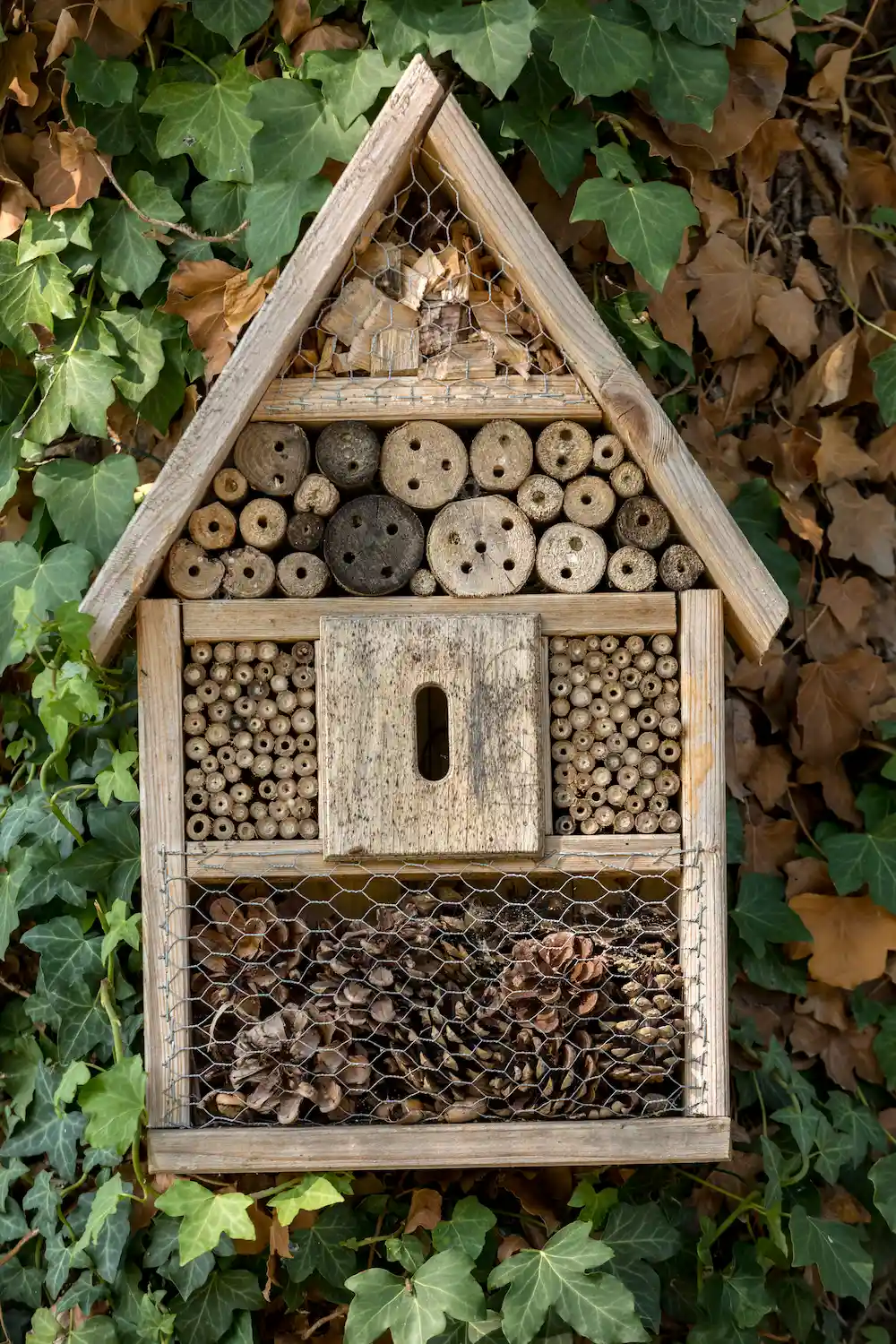
Creating a bee hotel is one of the most rewarding ways to support local wildlife, particularly our native solitary bees. Unlike honeybees, solitary bees don’t live in colonies but instead seek out small cavities to lay their eggs. By providing them with a purpose-built home, you’re offering vital nesting sites that can significantly boost pollinator populations in your garden.

Why Build a Bee Hotel?
Solitary bees are incredibly efficient pollinators – a single red mason bee can do the work of 120 honeybees! They’re also gentle creatures that rarely sting, making them perfect garden companions. However, modern farming practices and urban development have reduced their natural nesting sites. Your bee hotel can provide a safe haven for species like red mason bees, leafcutter bees, and yellow-faced bees, all common in Devon’s countryside.
Materials You’ll Need
- Wooden frame or container: An old wooden crate, bamboo sections, or purpose-built frame (20-30cm deep)
- Natural tubes: Hollow plant stems (bamboo, elder, or reed), or drilled wooden blocks
- Tube diameter: 6-10mm holes of varying sizes
- Weatherproofing: Roof overhang or angled shelter
- Mounting hardware: Screws, brackets, or wire for securing Optional: Pine cones, corrugated cardboard, or straw for additional insects

Step-by-Step Construction
Step 1: Prepare Your Frame
Choose a sturdy wooden frame or repurpose an old crate. The depth should be 15-20cm to provide adequate nesting space. Sand any rough edges and ensure the frame is weather-resistant. If using untreated wood, apply a natural wood preservative to extend its life.
Step 2: Create the Tubes
For bamboo tubes: Cut bamboo canes into 15-20cm lengths, ensuring cuts are made just behind nodes to create natural end caps. Sand the cut ends smooth to prevent damage to delicate bee wings.
For wooden blocks: Drill holes 6-10mm in diameter and 15cm deep. Vary the hole sizes to accommodate different bee species. Use a sharp drill bit and work slowly to prevent splintering.
Step 3: Arrange and Secure Materials
Pack your tubes tightly into the frame, ensuring they’re horizontal and secure. Mix different materials – bamboo, drilled wood, and hollow stems create varied nesting options. Ensure all openings face outward and are easily accessible.
Step 4: Add Weather Protection
Install a sloping roof or overhang to protect the hotel from rain. The roof should extend 5-10cm beyond the frame. Good drainage is essential – waterlogged tubes can be fatal to developing bee larvae.

Placement and Installation
Location Selection
- South or southeast-facing: Bees need morning sun to warm up for activity
- Shelter from strong winds: Protect from harsh weather while ensuring good air circulation
- Height: Mount 1-2 meters above ground, away from foot traffic
- Nearby flowers: Position within 300 meters of diverse flowering plants
Seasonal Timing
Install your bee hotel in late winter or early spring (February-March) before the bee season begins. This gives the structure time to weather naturally before residents arrive.

Maintenance and Care
Annual Maintenance
- Autumn cleaning: Remove old tubes and replace with fresh ones
- Inspect for damage: Check for cracks, loose fittings, or weather damage
- Pest management: Watch for parasitic wasps or other issues
What to Expect
Solitary bees typically nest from March to September. You’ll notice activity as female bees visit to lay eggs, often sealing tubes with mud, leaves, or plant material. Don’t disturb active tubes – the next generation is developing inside!
Signs of Success
- Sealed tube entrances (indicating eggs have been laid)
- Bee activity around the hotel in spring and summer
- Increased pollination in your garden
- Emergence holes in tubes the following year
Supporting Devon’s Native Bees
Your bee hotel works best as part of a pollinator-friendly garden. Plant native Devon wildflowers like:
- Spring: Primrose, wood anemone, and wild cherry
- Summer: Foxglove, bramble, and meadowsweet
- Autumn: Heather, ivy, and Michaelmas daisy
By creating this haven for solitary bees, you’re contributing to the conservation of Devon’s remarkable biodiversity while enjoying the increased beauty and productivity of your garden.
For more wildlife gardening tips and seasonal flower guides, explore our other wildlife resources.