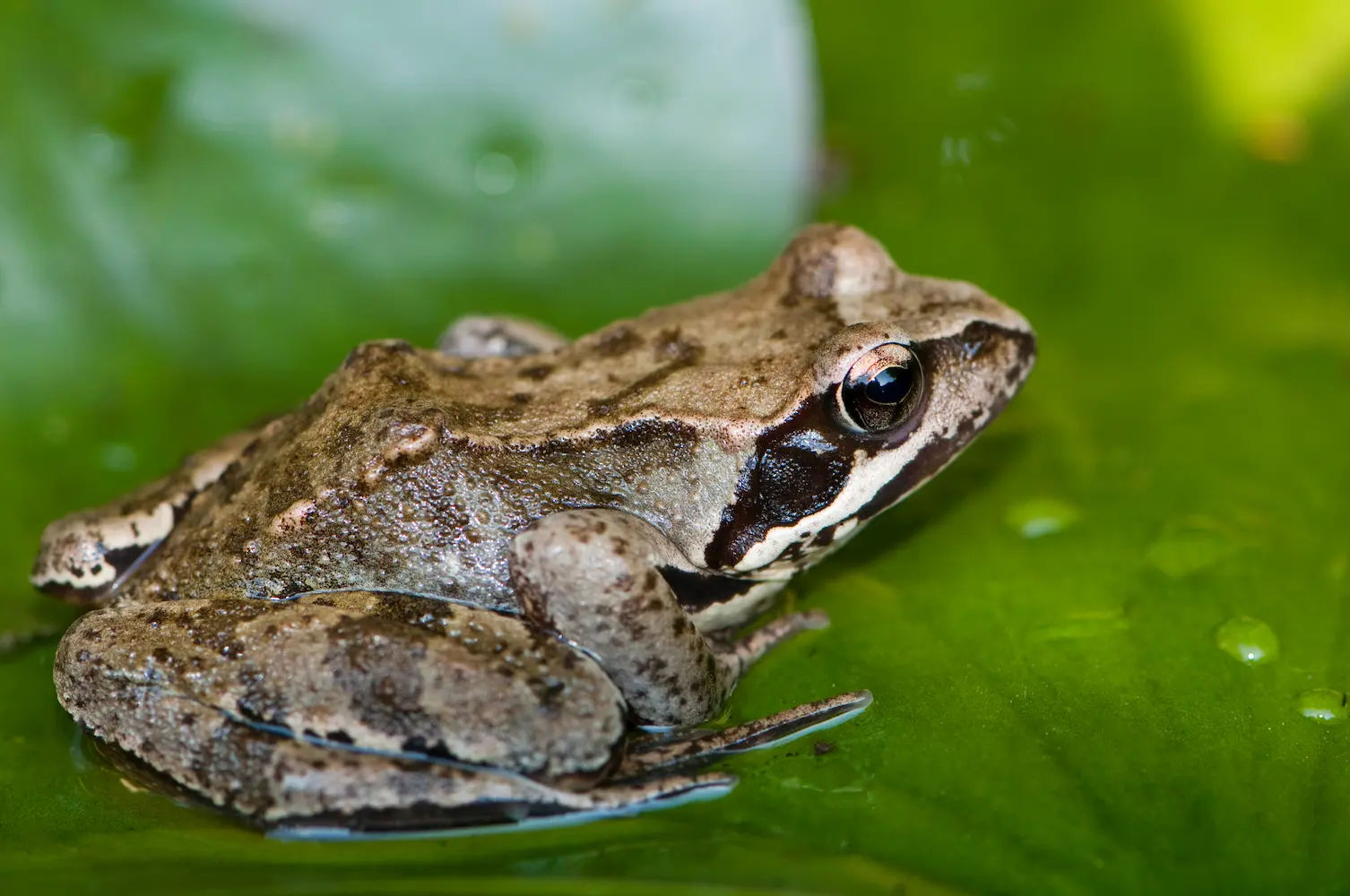
Common Frog
Rana temporaria
March brings the annual migration to garden ponds, where you might spot them emerging from winter hiding spots under logs and in compost heaps. Males develop dark, swollen thumbs during breeding season and can be heard croaking quietly at night. They’re voracious predators of garden pests, consuming hundreds of slugs, snails, and insects that would otherwise damage flowers. Look for the distinctive clumps of frogspawn – each female can lay up to 4,000 eggs. These amphibians can live for 12 years and will return to the same pond annually, showing remarkable site fidelity.